

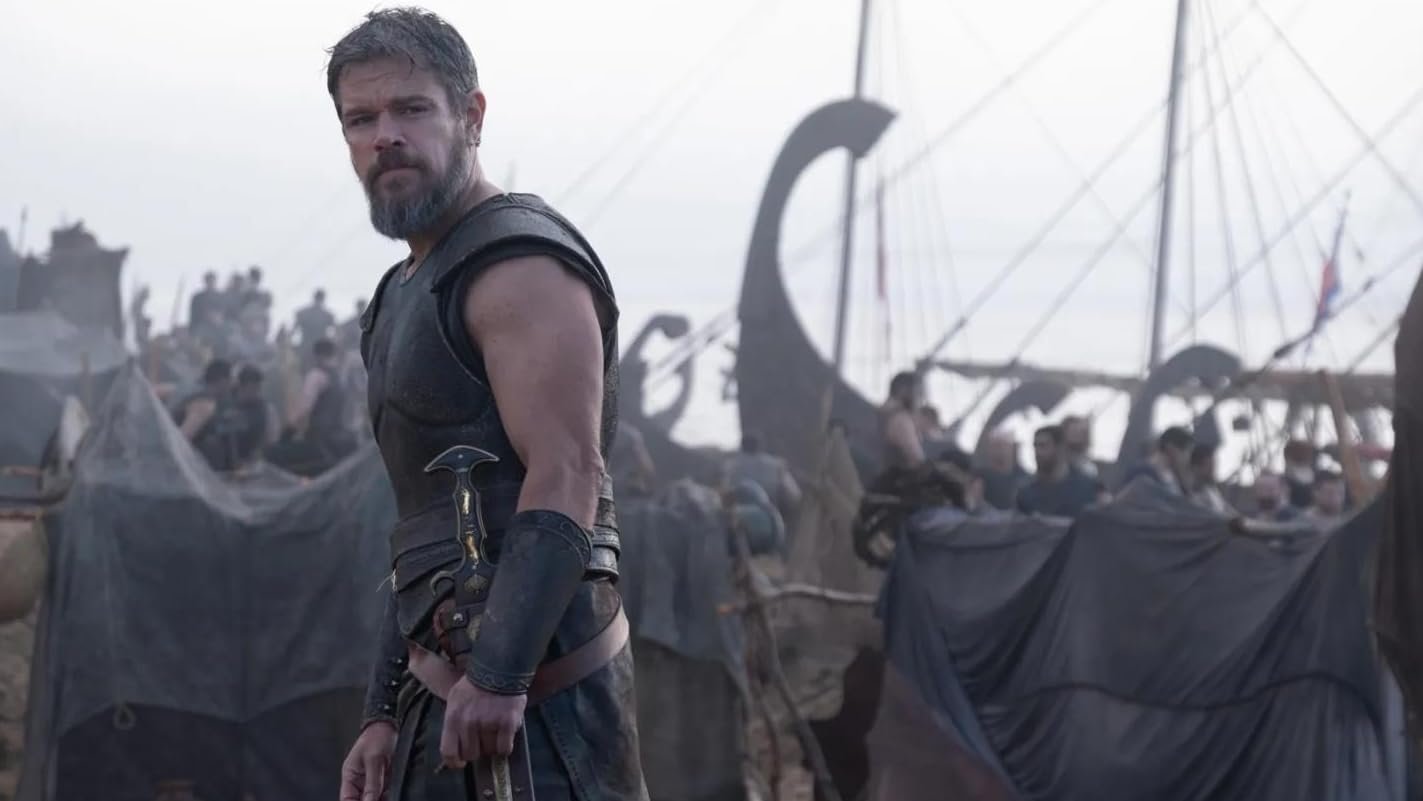
This Christopher Nolan Odyssey film review explores how the director reshapes an ancient epic for modern audiences. A man carries a war within his mind, even after the battlefield fades. Nolan’s 2026 blockbuster proves that Homer’s timeless poem still deserves a grand retelling, and it does so with striking confidence.
Christopher Nolan Odyssey Film Review: A Bold Reimagining
Nolan approaches “The Odyssey” unlike any filmmaker before him. Instead of leaning purely on spectacle, he treats the story as a meditation on memory, guilt, and identity. Consequently, the film feels less like a retread and more like a fresh discovery of familiar territory.
The narrative follows the same bones as Homer’s original text. However, Nolan infuses it with his signature nonlinear storytelling and psychological tension, a sensibility shaped in part by his own Christopher Nolan Odyssey movie choices. As a result, viewers experience the journey home not just as physical travel, but as an internal reckoning.
Visual Ambition Meets Ancient Myth
Nolan’s visual language elevates the mythic elements without losing emotional grounding. Additionally, the production design bridges the ancient world with a cinematic scale rarely attempted at this level. Notably, the film avoids leaning too heavily on digital effects, favoring practical craftsmanship instead.
The cinematography captures both intimacy and grandeur in equal measure. Meanwhile, the score reinforces the emotional weight of each turning point in the story. Together, these elements create an atmosphere that feels both ancient and immediate.
Performances That Anchor the Epic
The cast delivers performances that ground the mythological narrative in genuine human emotion. Furthermore, the lead actor captures the internal conflict of a soldier haunted by war. This portrayal gives the film emotional credibility beyond its visual spectacle.
Supporting performances add texture to the world without overshadowing the central journey. In contrast to typical blockbuster ensembles, each character here serves a clear narrative purpose. Therefore, the film maintains focus even amid its expansive scope.
Thematic Depth Beneath the Adventure
Beneath the action, Nolan explores themes of memory, trauma, and the cost of survival. This thematic depth separates the film from typical adventure blockbusters. As a result, audiences leave with more than just visual excitement.
The film also examines how war reshapes identity long after the fighting ends. Meanwhile, it questions what home truly means for someone forever changed by conflict. These layers reward viewers who look beyond surface-level spectacle, a question the Christopher Nolan Odyssey ending explained tackles in even greater detail.
- Strong emotional core rooted in psychological realism
- Ambitious yet controlled visual storytelling
- Performances that balance myth with humanity
- Thematic weight beneath the adventure narrative
Why This Odyssey Adaptation Stands Out
Many adaptations of classic literature struggle to feel relevant today. However, Nolan’s version succeeds by treating the source material with genuine respect. Furthermore, he modernizes the emotional stakes without stripping away the story’s ancient soul.
The pacing allows tension to build naturally across the runtime. Consequently, the film earns its emotional payoffs instead of rushing toward spectacle. Finally, this patience makes the adventure feel earned rather than manufactured.
Overall, this Christopher Nolan Odyssey film review confirms the director’s ability to reinvent timeless material. The film honors Homer’s legacy while offering something distinctly modern. In the end, it proves that some journeys remain worth retelling, no matter how many centuries pass.

1 Comment
Pingback: Nolan's odyssey bfi imax record beats star wars debut