

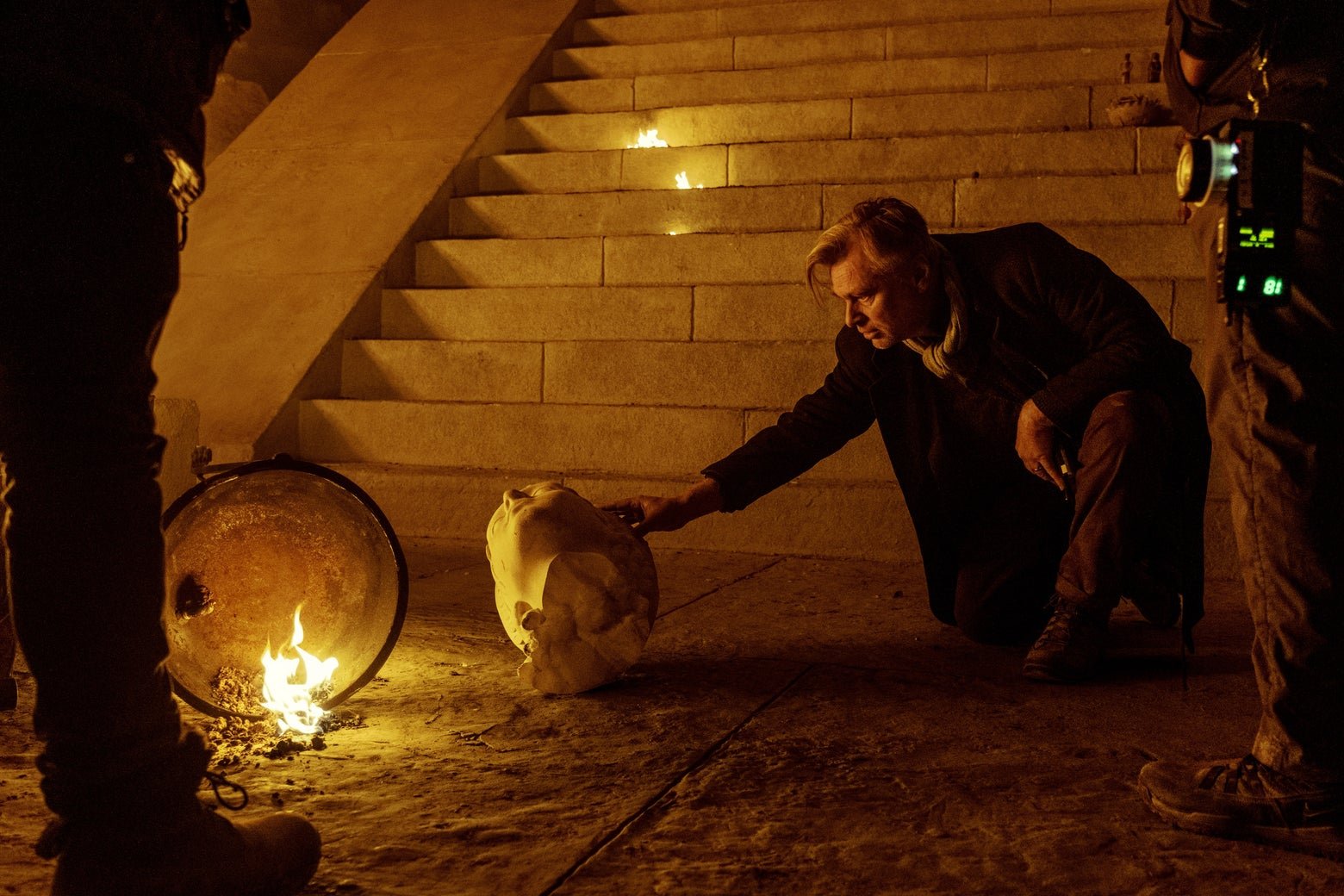
Christopher Nolan Odyssey ending explained discussions are already spreading fast, and for good reason. Nolan has taken a 2,700-year-old epic and quietly rewired its final moments. As a result, the meaning of the entire story shifts in ways few expected.
Christopher Nolan Odyssey Ending Explained: What Actually Changes
Nolan is famous for twisty timelines and reality-bending reveals. However, adapting Homer seems like an odd match for that reputation. The source material is ancient, widely known, and already has a definitive ending. In fact, the director’s own Christopher Nolan Odyssey movie choices hinted at this structural ambition long before the ending was ever discussed publicly.
Notably, Nolan doesn’t rewrite Homer’s plot outright. Instead, he reframes it. The final stretch of the film recontextualizes everything viewers just watched, similar to his earlier work in structure-driven storytelling.
Therefore, longtime fans of the poem may feel both familiarity and surprise. The broad journey remains intact. Meanwhile, the emotional and thematic core shifts subtly, then significantly, by the closing scenes.
How the Twist Reshapes Odysseus’s Journey
Traditionally, Odysseus’s voyage home centers on endurance, cunning, and divine interference. Nolan keeps these elements visible throughout the film. Consequently, audiences still get monsters, gods, and a long-suffering hero.
However, the ending recasts these trials in a new light. What once felt like straightforward mythic adventure suddenly gains a psychological or structural double meaning. This mirrors Nolan’s tendency to hide the real story inside the obvious one.
As a result, viewers may reconsider earlier scenes once the credits roll. Details that seemed decorative reveal themselves as quiet setup. Finally, the film rewards a second viewing more than a passive first watch.
Why Zendaya’s Role Matters to the Twist
Zendaya’s casting adds another layer to this reinterpretation. Her character interacts with the narrative in ways that extend beyond typical mythological adaptations. Furthermore, her presence hints at Nolan’s larger structural intentions before the ending fully lands.
In contrast to a straightforward retelling, her arc seems tied directly to the twist itself. This suggests Nolan built the ending into the film’s foundation, rather than bolting it on later. Additionally, this approach fits his pattern of hiding meaning inside character relationships.
Therefore, her role becomes essential to understanding the final revelation. Viewers who track her scenes closely may notice clues before the actual twist. Meanwhile, casual viewers might only recognize the significance in hindsight.
What the Sea and the Sea People Really Represent
The Odyssey has always used the sea as a symbol of chaos and transformation. Nolan appears to lean into this heavily. The “Sea People,” a historically debated group tied to Bronze Age collapse, also enter the story.
Consequently, Nolan blends historical mystery with mythic narrative. This choice adds real-world ambiguity to a tale often treated as pure fantasy. As a result, the ending gains weight from both legend and history simultaneously.
In contrast to previous film adaptations, this version doesn’t treat the sea as mere backdrop. Instead, it becomes central to the twist’s logic. Therefore, the final scenes feel less like fantasy and more like historical reinterpretation.
Why This Ending Works for Modern Audiences
Modern audiences often expect layered storytelling, especially from Nolan. Therefore, a straightforward retelling of Homer would feel incomplete. His reputation demands structural surprise, and this film delivers exactly that.
Additionally, the twist doesn’t erase the original poem’s themes. Instead, it deepens them. Loyalty, identity, and homecoming still anchor the story, but now carry additional resonance.
Finally, the ending encourages debate, much like Nolan’s other films. Audiences will likely argue over meaning for months. This, in itself, mirrors the enduring nature of Homer’s original text.
Key Takeaways From the New Ending
- The twist reframes familiar events rather than replacing them
- Zendaya’s character appears central to the hidden meaning
- The Sea People connect myth to historical debate
- Early scenes gain new significance after the ending
- The film rewards repeat viewings, consistent with Nolan’s style
Ultimately, Nolan proves that even the oldest stories can still surprise. His version of The Odyssey honors its source while reshaping its final meaning. Consequently, this adaptation stands as one of the more daring literary reinterpretations in recent cinema.
