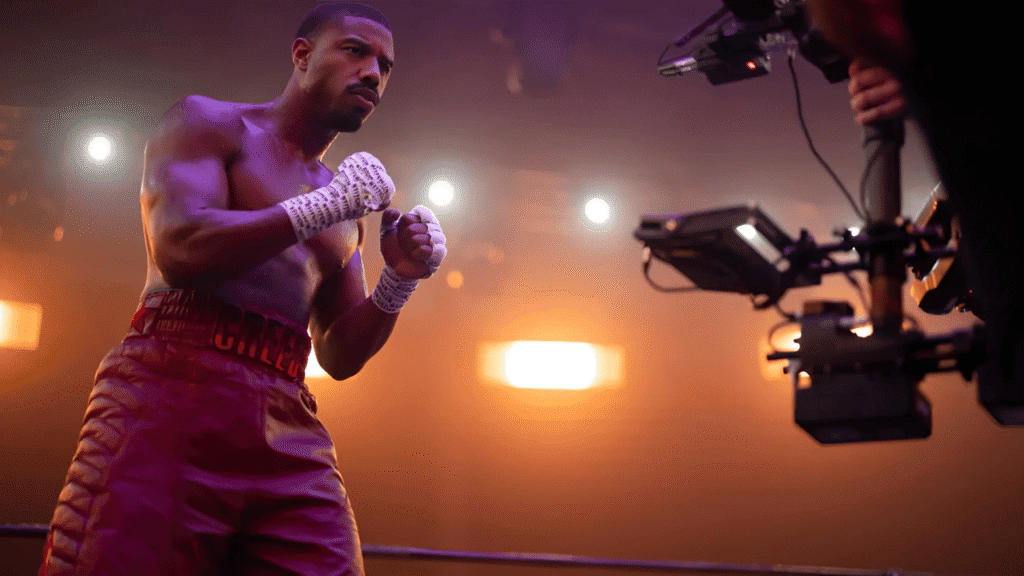
When Michael B. Jordan first stepped into the ring as Adonis Creed in 2015, audiences saw a young actor carrying the weight of legacy. Not only was he stepping into the shoes of a fictional boxing champion, but he was also taking on the torch from the Rocky franchise — one of Hollywood’s most beloved stories.
Seven years later, when Creed III arrived, Jordan wasn’t just playing Adonis Creed anymore. He was living him. Bigger, sharper, stronger, and for the first time, sitting in the director’s chair, Michael B. Jordan transformed both physically and mentally into the fighter fans had been waiting for. His body told the story before a word was spoken: the physique of a real champion, sculpted through months of grueling preparation.
This is the story of how Michael B. Jordan built his Creed III body — and why it resonated so deeply with fans around the world.
The Pressure of Creed III
For Jordan, Creed III was more than just another sequel. It was the first film he directed, the first time the franchise stood without Sylvester Stallone’s Rocky, and the first time the entire weight of the story rested on his shoulders.
“I knew I had to step up in every way,” Jordan admitted in interviews. “Directing, leading the cast, and still showing up physically as Adonis… there was no room to cut corners.”
That meant doubling down on his preparation. He couldn’t afford to just “look good.” He needed to be convincing as a world champion boxer, someone fans would believe could go toe-to-toe with real fighters.
The internet was ready to analyze every detail. Fitness communities would break down his diet. Boxing fans would critique his movement. And Hollywood watchers would measure his success as a first-time director. The pressure was enormous — and Jordan knew the only answer was discipline.
Returning to the Gym: The Real Work Begins
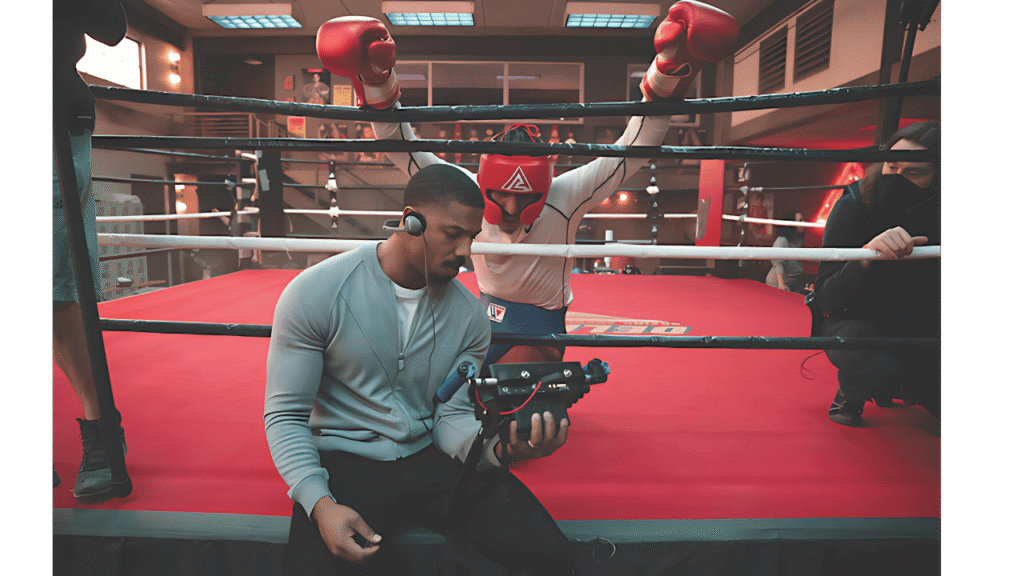
Michael B. Jordan had already built an impressive physique for Creed and Creed II. But by the time Creed III was in pre-production, he had new goals. He wanted more mass, deeper definition, and a presence that matched the emotional weight of the film.
So he turned once again to his longtime trainer Corey Calliet. The plan: rebuild Jordan from the ground up.
Calliet’s philosophy wasn’t about making him look like a bodybuilder. It was about creating a body that was athletic, explosive, and camera-ready from every angle.
Training wasn’t a quick fix. It was a six-day-a-week grind, with sessions lasting two to three hours. Each day was focused on building a different aspect of the fighter physique:
- Day 1: Chest & Shoulders Power – heavy bench presses, incline dumbbell presses, military presses.
- Day 2: Back & Core Strength – deadlifts, pull-ups, lat pulldowns, cable rotations, planks.
- Day 3: Boxing Training – mitt work, heavy bag, jump rope, footwork drills.
- Day 4: Arms & Conditioning – biceps curls, triceps dips, sprints, medicine ball slams.
- Day 5: Lower Body Power – squats, lunges, box jumps, sled pushes.
- Day 6: Full-Body & Cardio – circuits blending strength and HIIT for fight-level stamina.
Sundays were recovery — but even then, Jordan often spent time stretching, doing yoga, or hitting the pool. Rest was never really “rest.”
The Fighter’s Diet
Jordan’s physical transformation wasn’t just about what happened in the gym. In fact, his team has admitted that diet made up at least 70% of the results.
For Creed III, he ate like an athlete:
- Protein at every meal — chicken, salmon, steak, eggs, protein shakes.
- Complex carbs — brown rice, quinoa, sweet potatoes, oatmeal.
- Vegetables — broccoli, spinach, asparagus, roasted greens for fiber and micronutrients.
- Healthy fats — avocado, nuts, olive oil.
His meals were planned to the gram. No fried foods, no processed sugar, no alcohol. Even cheat meals were strategic.
Hydration was another key. Reports say he drank a gallon of water a day to keep muscles full and metabolism high.
And timing mattered: protein shakes immediately after workouts, carbs earlier in the day, lighter meals at night. His body was treated like a machine — every calorie had a purpose.
The Mental Fight
What people often forget is the mental toll of such transformations. It’s not just about eating chicken and rice or lifting weights. It’s about saying no — to social outings, to late nights, to comfort food.
Jordan has admitted that the process can be isolating. While others relax, he was measuring meals. While friends went out, he was hitting the gym or reviewing fight choreography.
And on top of it all, he was directing. Imagine wrapping a 14-hour shoot and then heading into a boxing gym to train. That’s not Hollywood glamour — that’s grit.
“It was about mindset,” Jordan said. “If I was asking the cast and crew to give 100%, I had to give 120%.”
That relentless mentality is what made his Creed III body not just impressive, but believable.
Why Fans Couldn’t Stop Talking
When Creed III released, fans weren’t just impressed — they were obsessed. Clips of Jordan’s shirtless scenes went viral. Fitness subreddits broke down his training plan. Twitter lit up with side-by-side comparisons of Creed II vs Creed III, pointing out how much bigger and sharper he looked.
Why did it catch fire? Because it felt real. Unlike some Hollywood transformations that rely on CGI, camera tricks, or “unspoken shortcuts,” Jordan’s dedication showed. He looked like someone who had put in the work — because he had.
People admired it not just for the aesthetics but for what it symbolized: discipline, consistency, and sacrifice.
Beyond the Muscles: Directing in Shape
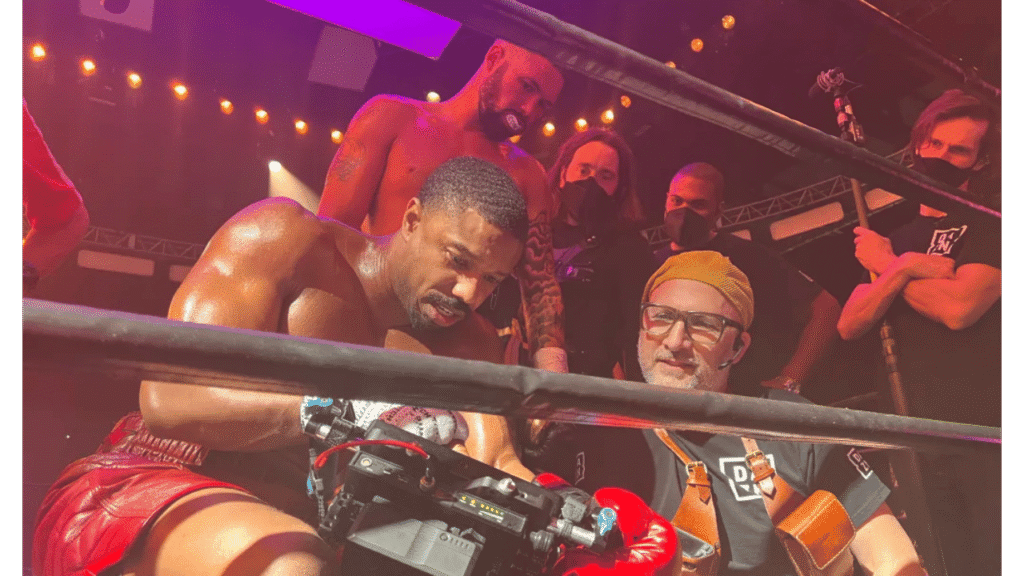
What made this transformation even more impressive was that Jordan wasn’t only starring in Creed III. He was directing it. That meant juggling 16-hour days, managing actors, working with cinematographers, and still showing up on camera with a champion’s body.
Most directors barely sleep. Most actors struggle to stay in shape while filming. Jordan did both at once. It’s one of the rare moments in Hollywood where an actor’s physical transformation doubled as a symbol of his professional evolution.
Fans weren’t just watching Adonis Creed fight — they were watching Michael B. Jordan fight for his vision as a filmmaker.
Lessons for Everyone
Not everyone can train like Michael B. Jordan. Most of us don’t have three hours a day, a personal chef, or Corey Calliet as a trainer. But the lessons behind his transformation are universal:
- Consistency > intensity. Even small daily habits add up.
- Discipline means sacrifice. You can’t have results without giving something up.
- Your mindset is everything. Jordan’s body reflected his mental toughness more than his workout plan.
Even applying a fraction of his routine — committing to the gym three times a week, cutting processed foods, staying hydrated — can create life-changing results over time.
A Transformation That Lasts
By the end of Creed III, Jordan wasn’t just playing a fighter. He had become one — physically, mentally, and professionally. His transformation proved that greatness isn’t built overnight. It’s carved day by day, rep by rep, meal by meal.
That’s why fans still talk about it. That’s why it went viral. Because behind the sculpted muscles and ripped abs was a story everyone could connect to: the fight to become your best self, no matter the odds.
Michael B. Jordan didn’t just win in the ring. He won the respect of audiences worldwide.