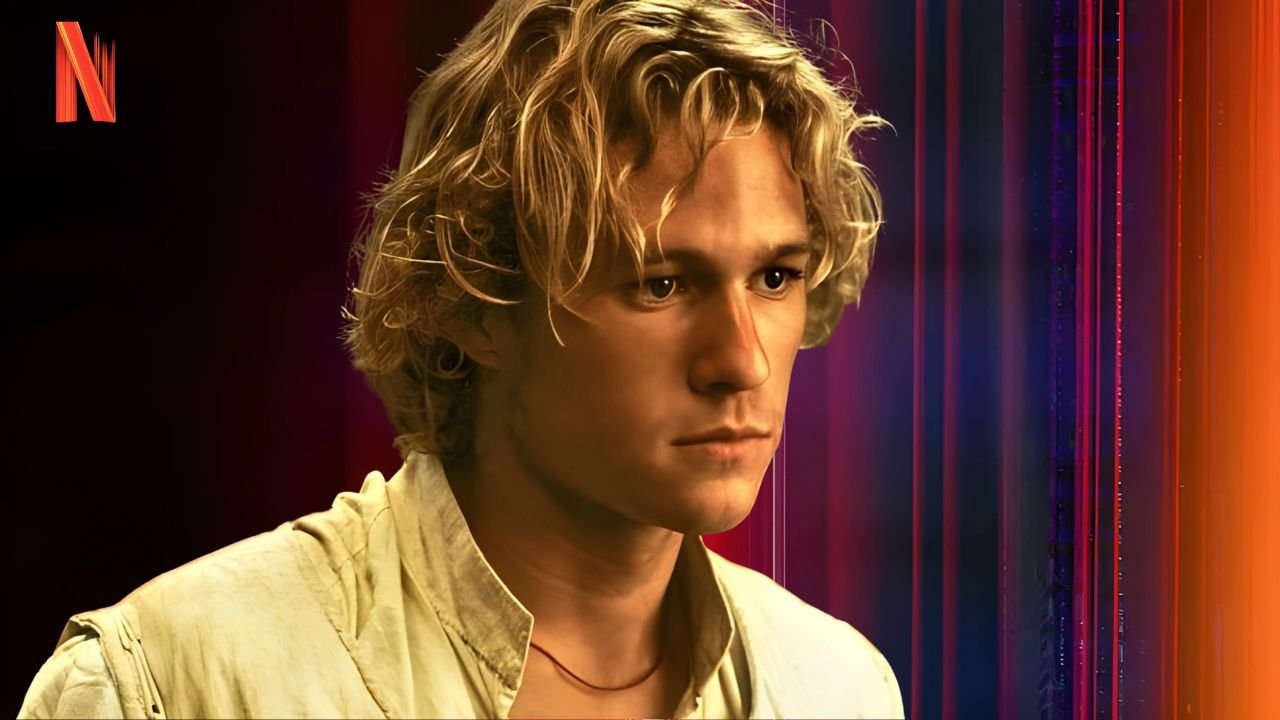
There is a particular ache that comes with the legacy of Heath Ledger. It’s the ache of “what if?” What if we had gotten to see the next chapter? What if the very intensity that made his performances so breathtaking was also the thing that cost him everything? His story is not just a biography; it’s a haunting elegy on the price of genius, a flame that burned with impossible brilliance before being extinguished far too soon.
From Perth to the World: The Making of a Poet in Disguise
Born to Sally Ledger Bell, a French teacher, and Kim Ledger, a racecar driver and mining specialist, Heath Andrew Ledger’s life began with a literary nod—named after the stormy protagonists of Emily Brontë’s *Wuthering Heights*. It was a fitting start for a soul destined to channel deep emotional currents. Alongside his sister Kate, he grew up in Perth, a world away from the glare of Hollywood.
His journey to acting wasn’t a calculated ambition but a calling. School plays led to a bold move to Sydney at 17, and then to the charming, breakout role in 10 Things I Hate About You. But even then, he bristled against the label of ‘heartthrob’. He wasn’t running towards fame; he was running towards truth. For a deeper look at the actors who defined this era, explore our guide to the legacy of 90s teen movies.
The Chameleon: Choosing Depth Over Stardom
Ledger’s career is a masterclass in intentionality. He fled from easy choices, seeking out roles that were complex, messy, and human. In The Patriot he showed fierce loyalty; in Monster’s Ball, raw grief. But it was his soul-shattering portrayal of Ennis Del Mar in Brokeback Mountain that announced him as a generational talent. His performance was a quiet earthquake of repressed emotion, earning him his first Academy Award nomination and proving he was an actor of profound depth, not just charisma.
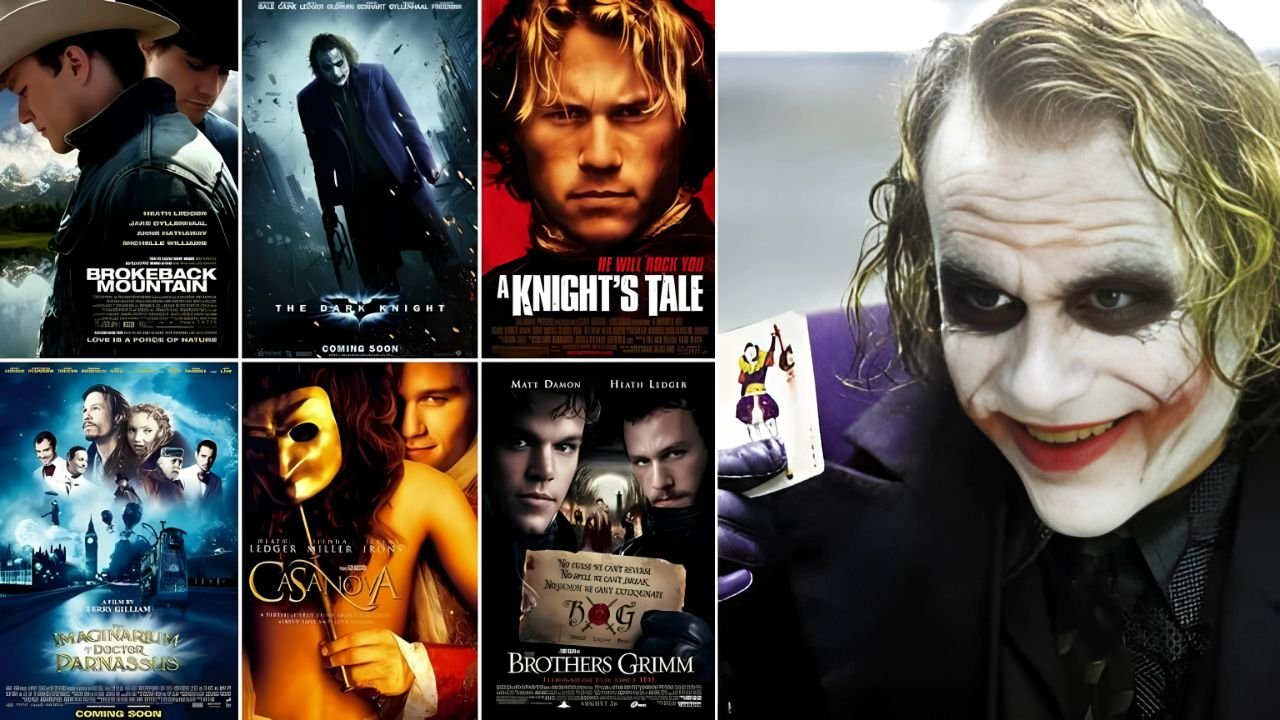
He continued to defy expectation, diving into the grunge scene of Lords of Dogtown, the heroin-addicted poet in Candy, and even a surreal take on Bob Dylan in I’m Not There. Each role was a layer shed, a step closer to some essential, artistic core.
Descending into Chaos: The Price of Becoming the Joker
Then came the role that would define him in the public eye and, many speculate, consume a part of him. When Christopher Nolan cast him as The Joker in The Dark Knight, skepticism was rampant. Ledger’s response was to disappear entirely. He locked himself away, maintaining a chilling “Joker diary” to document the character’s anarchic psyche.

The result was not a performance; it was a possession. His Joker was a chaotic force of nature, a terrifying embodiment of nihilism. Co-stars like Michael Caine recounted forgetting their lines upon his entrance, stunned by the raw energy he unleashed. It was a masterpiece of method acting, but the question lingered: what did it cost the man to dwell in that darkness for so long? To understand this film’s impact, see our ranking of Christopher Nolan’s most impactful films.
The Silent Struggle: A Battle Fought Off-Screen
While the world saw an actor at the peak of his powers, Ledger fought a private war with insomnia and anxiety. The pressure to deliver, the inability to shut off his own mind, led him to rely on prescription medication to find rest. On January 22, 2008, the battle was lost. His death, ruled an accidental overdose from a toxic combination of prescription drugs, sent a shockwave through the world. The brightest flame had flickered out.
His final, unfinished film, The Imaginarium of Doctor Parnassus, became a testament to the love he inspired. Friends and admirers Johnny Depp, Jude Law, and Colin Farrell stepped in to complete his role, a poignant and surreal tribute to a fallen comrade.
A Posthumous Oscar and a Collective Heartbreak
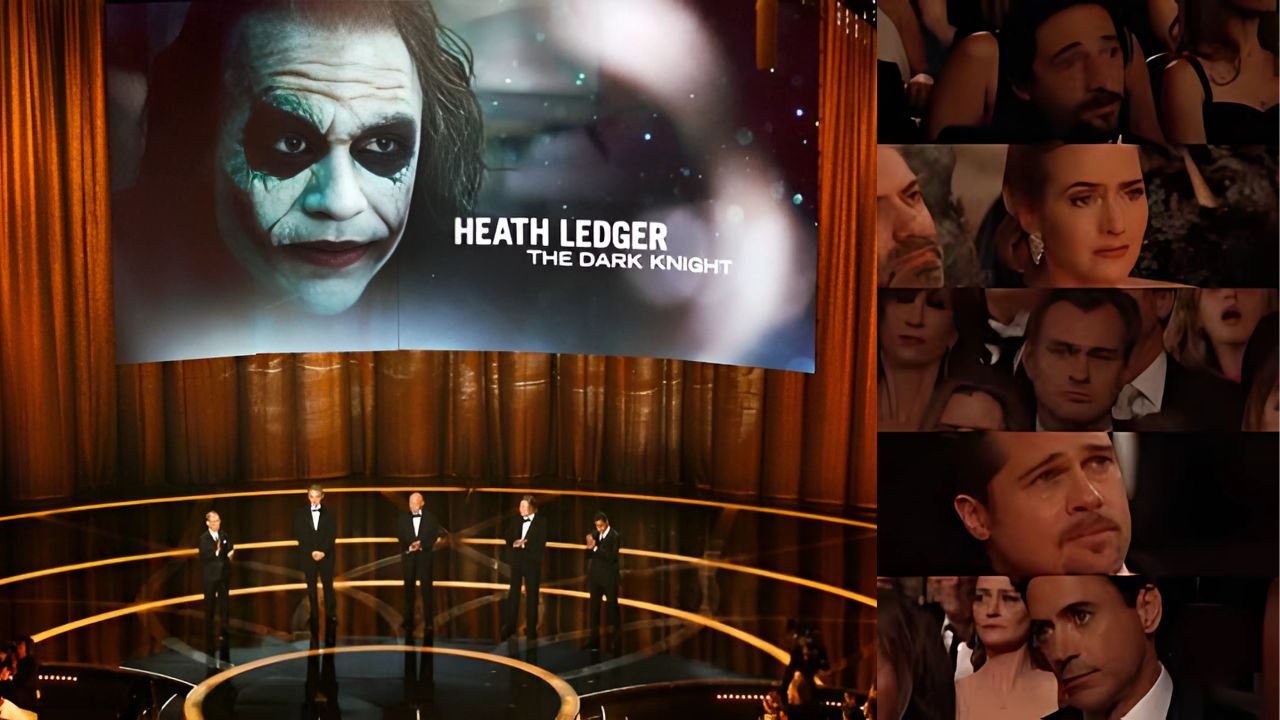
Thirteen months after his death, the Academy Awards stage hosted one of its most emotionally charged moments. As Heath Ledger’s name was called for Best Supporting Actor, a standing ovation erupted. His parents and sister, their faces a mosaic of pride and profound grief, accepted the award on his behalf. The Oscar was no longer just a trophy; it was a relic, a symbol of a talent lost and a legacy cemented in tragedy and triumph.
The Unanswered Question: Why His Legacy Endures
We remember Heath Ledger not just for the roles he played, but for the terrifying honesty he brought to them. He didn’t act; he revealed. In an age of superficiality, he dared to be vulnerable, dark, and complex. His legacy is a reminder that true art requires a piece of the artist’s soul.
His daughter, Matilda, grows up in the shadow of a father she never knew, but whose image is forever etched in cultural memory. His films are not mere entertainment; they are lessons in empathy, studies in the human condition. The ache of his absence is the very proof of his presence. He left us a collection of shattered mirrors, each reflecting a fragment of truth, and we are still piecing them together.
Final Reflection: The Echo That Remains
Heath Ledger’s story is a permanent fixture in the landscape of modern art. It asks us uncomfortable questions about the limits of dedication and the cost of brilliance. He gave us everything he had, and in the end, that was everything. The silence he left behind is not empty. It is filled with the echoes of his laughter in 10 Things I Hate About You, the quiet despair of Ennis Del Mar, the terrifying cackle of the Joker, and the hopeful words of a man who believed in feeling deeply, even if it meant breaking.
We cry for him because in his brief, spectacular arc, we see the beauty and fragility of our own. And that is a legacy more powerful than any award.
Further Reading: Dive deeper into the stories that shaped cinema. Explore our features on other artists we lost too soon or analyze the evolution of the cinematic villain that Ledger’s Joker forever changed.