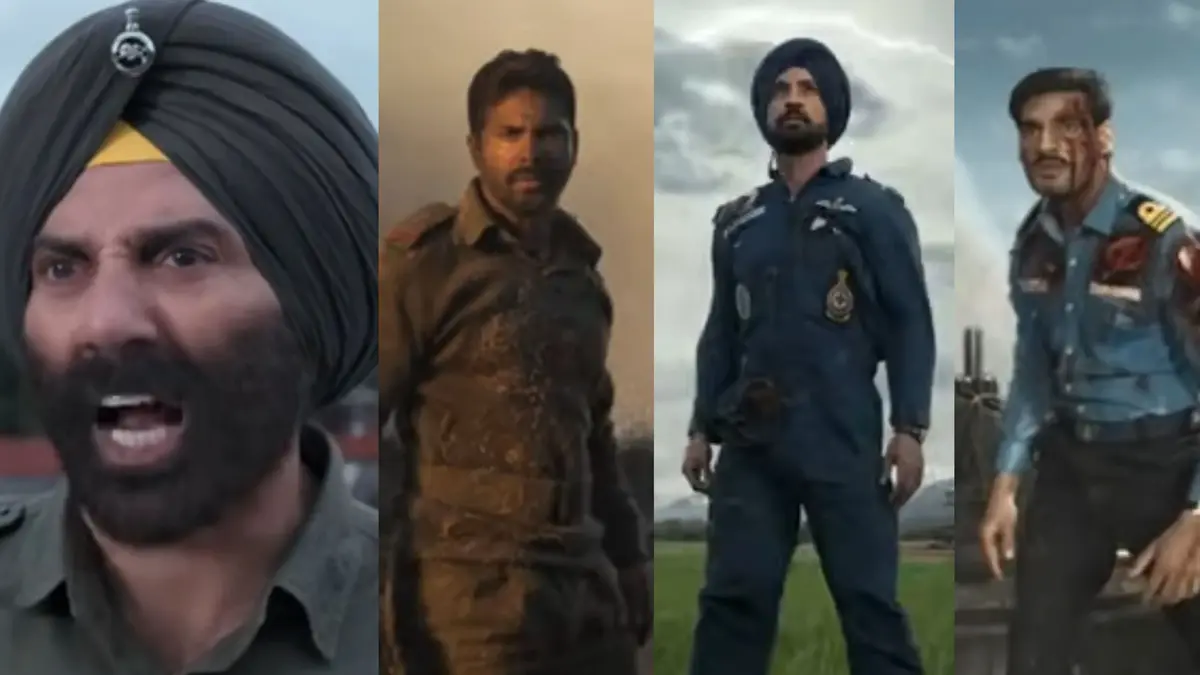
There is a scene in the movie Dhurandhar, where R Madhavan’s character, based on Ajit Doval, asks his subordinate in the early 2000s to keep the proofs about Pakistan printing fake Indian currency. Because the current administration won’t do anything, but in the future, we would have a leader who would do something about it. And at the end of the movie, we have Ranveer Singh’s voice-over that repeats the Uri dialogue, “yeh naya Hindustan hai, yeh ghar mein ghusega bhi aur maarega bhi.” So the gallery Aditya Dhar wants to play this movie is for those who celebrate hyper-nationalism. And if your political sensitivity falls in that zone, the three and a half hour duration of this movie might not be much of a task for you.
Post the Kandahar hijacking and the infamous attacks on the Parliament, IB Chief Ajay Sanyal’s suggestion to create a long-term plan where we would send one of our men to infiltrate the underworld of Pakistan that practically funds all the terrorist activities they sponsor, gets approval from the external affairs minister. What you see in Dhurandhar is the journey of that spy from being an absolute nobody to an influential figure.
Even if you ignore the whole soft propaganda that is running beneath this spy thriller, the film’s writing lacks elements that would create intrigue. Aditya Dhar, who has written this film, is following the usual beats in world-building, and the only thing that is helping him here is scale. That pale green-tinted, rugged outlook of Pakistan, somewhat similar to how Hollywood portrays the Muslim countries, is giving this tougher outlook to the visuals. But when you look at the story’s simplistic nature, you would realize all that technical glory is just peripheral decorations.
Triggering the emotions of the audience is a filmmaking knack, and Aditya Dhar knows how to play with that. Even in Uri, he had changed the timelines of certain real incidents to cater to the audience who would love the ultimate triumph we see in that movie. Here, what he is trying to do is build a fictional character who is somewhat of a witness to all the major terrorist attacks during the decade, followed by the Kandahar hijack. So at constant intervals, we are getting these flashes of the actual events like the Parliament attack, 26/11, etc., which would sort of emotionally trigger the audience. There is a moment in the film where the entire screen is blood red, and in black letters, we hear what the terrorists actually said during the 26/11 attacks.
With handheld visuals and a dull color palette, Aditya Dhar is transporting us into that gangster world. The production quality of the movie, in terms of production design, combined with mostly fine visual effects, is actually helping the film have that intense feel. The gore is extreme in this movie, and at times it goes to an unnecessary level where the brutality reminded me of the kind of stuff we saw in Marco, where they are deliberately making scenes excessively barbaric for the shock value, as the story is an outright cliché. The romance in the story is a burden to the film, and since the movie’s duration is three and a half hours, it works as an unintended loo break for many.
Ranveer Singh, with his beefed-up physique, long hair, and intense voice, which reminded me of Ek Hee Raasta from Gully Boy, looks perfect for the role, and in the areas where he has to show a cold face, he is really good. But in some of the vulnerable bits, you could see the glimpses of the enthusiastic Ranveer. Akshaye Khanna, with his typical chin-heavy facial expression, has that aura you associate with a leader. Sanjay Dutt is still in the hangover of his role from Baaghi 4, and the heavy use of green screen backdrop in his intro sequence takes the joy out of it. Rakesh Bedi gets an extensive and important role with multiple shades, and he was good. R Madhavan’s Ajay Sanyal and Arjun Rampal’s Major Iqbal will hopefully have more footage in part 2, which will release in March 2026. There is a dialogue in the movie where Rakesh Bedi’s character tells our hero about the age gap between the lead pair. He reduces it to around 10, whereas in reality it is 20. Forget the real-world scenario, on screen, the screen age gap between these two is disturbingly huge. Maybe it will be a director’s brilliance to show that all that is normal in Pakistan?
The real Operation Lyari that happened in Pakistan was planned by the Pakistan Government to crack down on the underworld there. Aditya Dhar’s Dhurandhar is a patriotic fantasy where we look at the whole thing as some sort of master stroke by India, which sent a dedicated infiltrator to that world to instigate everyone. If you can forget all the writing flaws of a film if it offers jingoistic, escapist pleasure along with a good amount of gore, this glorified Baaghi might well work for you.