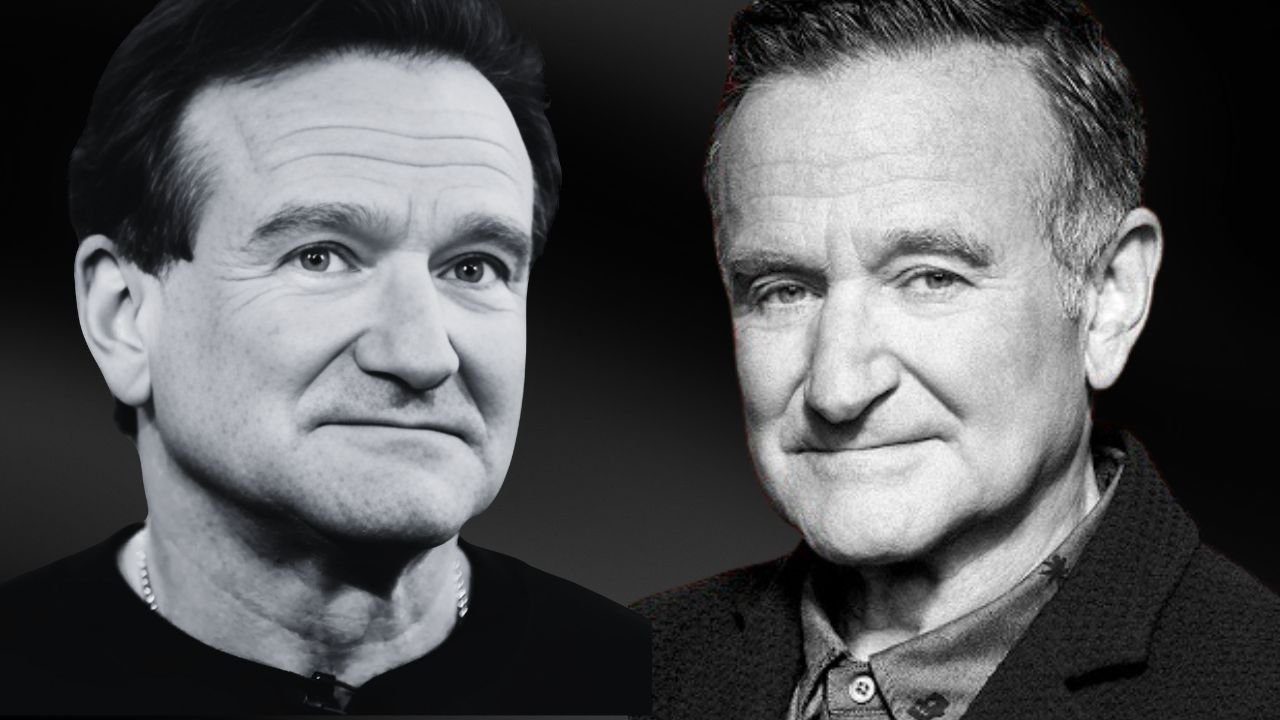
Few people have ever held the world in the palm of their hands like Robin Williams. He was manic, unstoppable, a hurricane of voices and characters. But beneath the rapid-fire wit was a man of staggering sensitivity, one who turned his own struggles into a lifeline for millions. His story is not simply one of comedy or tragedy, but of what it means to live fully — and to feel too deeply.
The Early Spark: A Shy Boy with a Loud Imagination
Robin McLaurin Williams was born in Chicago in 1951 to a Ford executive father and a fashion model mother. The family was well-off, but Robin was a lonely child, often retreating to his toy soldiers for companionship. From this solitude, a dazzling imagination emerged. He wasn’t just playing with toys; he was giving them voices, lives, and stories. The seeds of his future genius were sown in those quiet hours of pretend.
At Juilliard, he trained alongside Christopher Reeve, who later described Robin as having a “bottomless well of energy.” Even among the most gifted students, Robin was a comet: unpredictable, impossible to ignore, and destined to break free.
The Explosion of Genius: From Mork to Hollywood’s Heart
Robin burst into public consciousness as the alien Mork in *Mork & Mindy*, a role that allowed him to channel his improvisational chaos. From there, his career became a kaleidoscope: the irreverent DJ in *Good Morning, Vietnam*, the inspiring teacher in *Dead Poets Society*, the loving nanny in *Mrs. Doubtfire*, and the troubled therapist in *Good Will Hunting* — a role that earned him an Oscar.
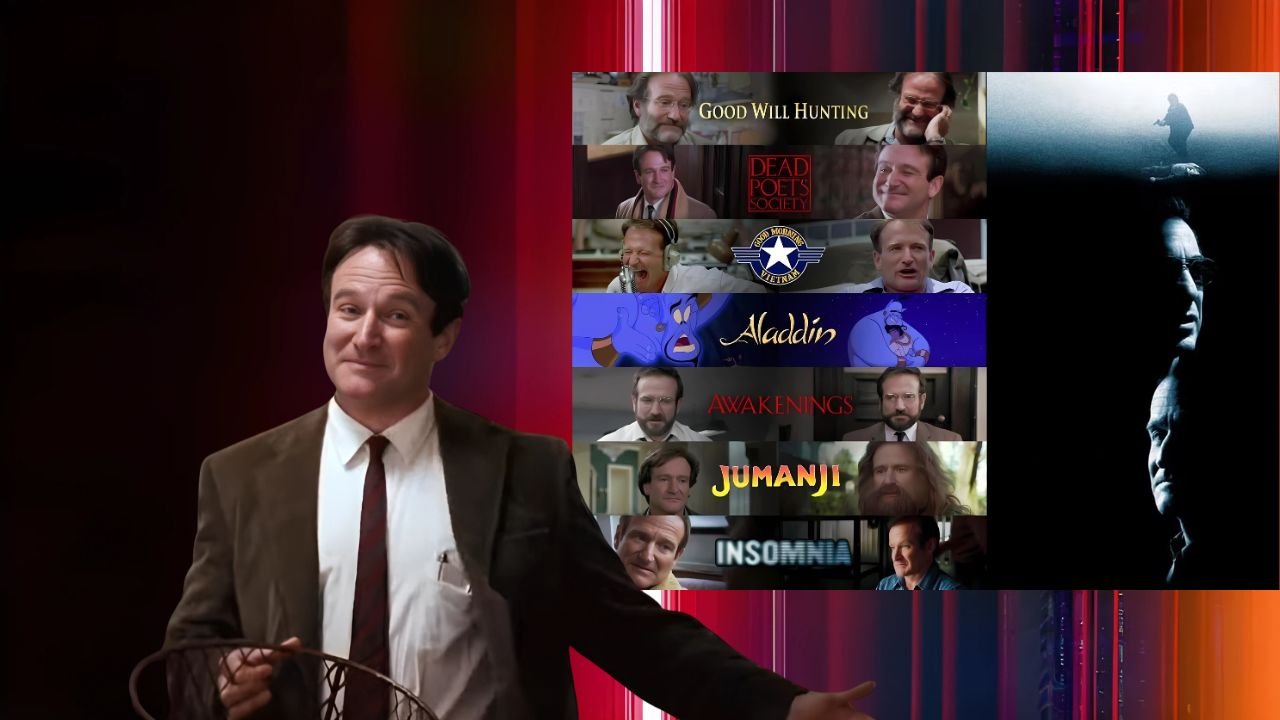
Williams gave voice to Disney’s Genie in *Aladdin*, a performance that was so explosive it reportedly gave animators more than 16 hours of material to work with. He didn’t just perform; he unleashed worlds. His gift was not just humor, but humanity — the ability to make us laugh until we cried, and then cry until we laughed again.
The Darkness Behind the Smile
But genius has a cost. For all his success, Robin battled lifelong demons: addiction, depression, and later the devastating neurological disease Lewy body dementia. Friends noted how he could be the life of the party and yet retreat into profound loneliness once the spotlight dimmed. The very sensitivity that made his art so profound often left him vulnerable to unbearable pain.
That spark lit up the world, but it also burned him from within.
August 11, 2014: The Day the Laughter Stopped
When the news broke that Robin Williams had taken his own life, the world seemed to collectively gasp. How could the man who gave us so much joy be unable to find enough for himself? The truth, revealed later, was heartbreaking: his mind was under siege by Lewy body dementia, a disease that causes confusion, paranoia, and unbearable mental torment. It wasn’t simply depression that took him, but a cruel illness that left him trapped in his own brilliance.
A Legacy That Refuses to Fade
In the years since his passing, Robin’s work has only grown more vital. His films are taught in classrooms, quoted endlessly, and cherished as emotional lifelines. For many, *Dead Poets Society* remains a call to arms: to seize the day, to live deeply, to refuse mediocrity. *Good Will Hunting* offers a rare portrayal of unconditional kindness. Even his stand-up, anarchic and unfiltered, feels timeless.
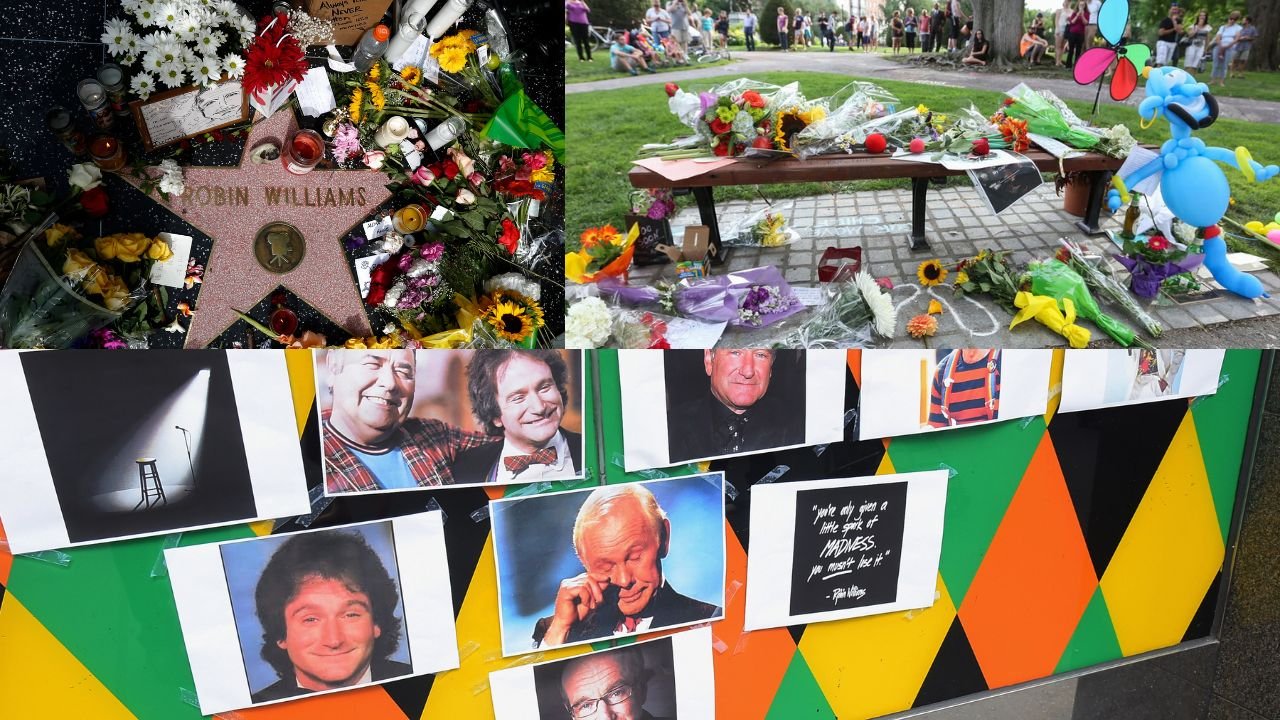
Perhaps most importantly, Robin’s death sparked global conversations about mental health, addiction, and the hidden battles even the brightest souls endure. He gave us laughter, but his final act gave us something else: permission to talk about the pain behind the smile.
Final Reflection: The Gift He Left Behind
Robin Williams’ life reminds us that joy and sorrow are not opposites but intertwined threads of the same fabric. He showed us that comedy can be a form of healing, that laughter can bridge the deepest wounds, and that vulnerability is not weakness but the highest form of courage.
We remember him not as a man who lost his fight, but as one who fought every day to give others hope. His voice still echoes — in the Genie’s jokes, in John Keating’s whispers to “seize the day,” in Sean Maguire’s gentle wisdom about love and loss. And in those echoes, he is still here.
Further Reading: Explore our feature on actors who shaped modern comedy or revisit our in-depth guide to movies that teach us to live.